

Distributor vs Supplier: Timing Your UK Stock Buys
With university season approaching in September and major trade shows like Booker's Foodservice event on the horizon, independent UK retailers are looking for every edge. A common pitfall for many is misunderstanding the roles of wholesale distributors and direct suppliers, which can directly impact lead times, costs, and ultimately, your profit margins. Trade buyers aren't asking "what is a distributor?"—they're asking "which path cuts my lead time and cost for my specific category in 2026?"
Defining a Wholesale Distributor: Your Local Stock Hub
A wholesale distributor acts as an intermediary, purchasing goods in large volumes directly from manufacturers or importers and then reselling them in smaller quantities to retailers. Think of them as your local stock hub, breaking down massive bulk orders into manageable sizes for independent shops, market traders, and online sellers. This "breaking bulk" function is crucial for businesses that can't commit to container-load minimums from a manufacturer.
For example, instead of ordering ten thousand auto accessories directly from the factory, you might buy a few hundred from a distributor. This approach avoids massive upfront costs and storage issues. Distributors typically offer a wider range of products from multiple brands within a specific category, making them a one-stop-shop for diverse inventory needs. They manage logistics, warehousing, and often provide credit terms, simplifying the procurement process for smaller businesses. UK distributors in 2026 prioritise suppliers offering fast replenishment, clear communication, and partnership support, according to ToolPak.

Defining a Wholesale Supplier: Direct from the Source
A wholesale supplier, on the other hand, is either the manufacturer of the goods themselves or a primary importer who brings products directly into the country. When you buy from a supplier, you are often buying closer to the source, potentially cutting out a layer of markup. Suppliers offer flexibility to test products and adjust inventory, especially for businesses looking to establish a direct relationship for higher volumes or exclusive lines.
Rysons, for example, has traded for over 40 years as an importer and distributor, family-run from Manchester. This means that for many of our own registered brands like Jayting or Cuddles, we act as the primary supplier. For other lines, we function as a distributor. Buying direct from an importer/supplier like us for items such as baby products or seasonal items like Window Insulation Kits can offer better per-unit pricing if your order volume meets their minimums. However, direct suppliers often have stricter minimum order quantities (MOQs) and longer lead times compared to distributors who hold ready stock.
Key Differences for Your Buying Strategy: Lead Times & Costs
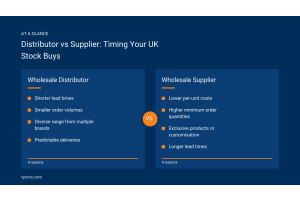
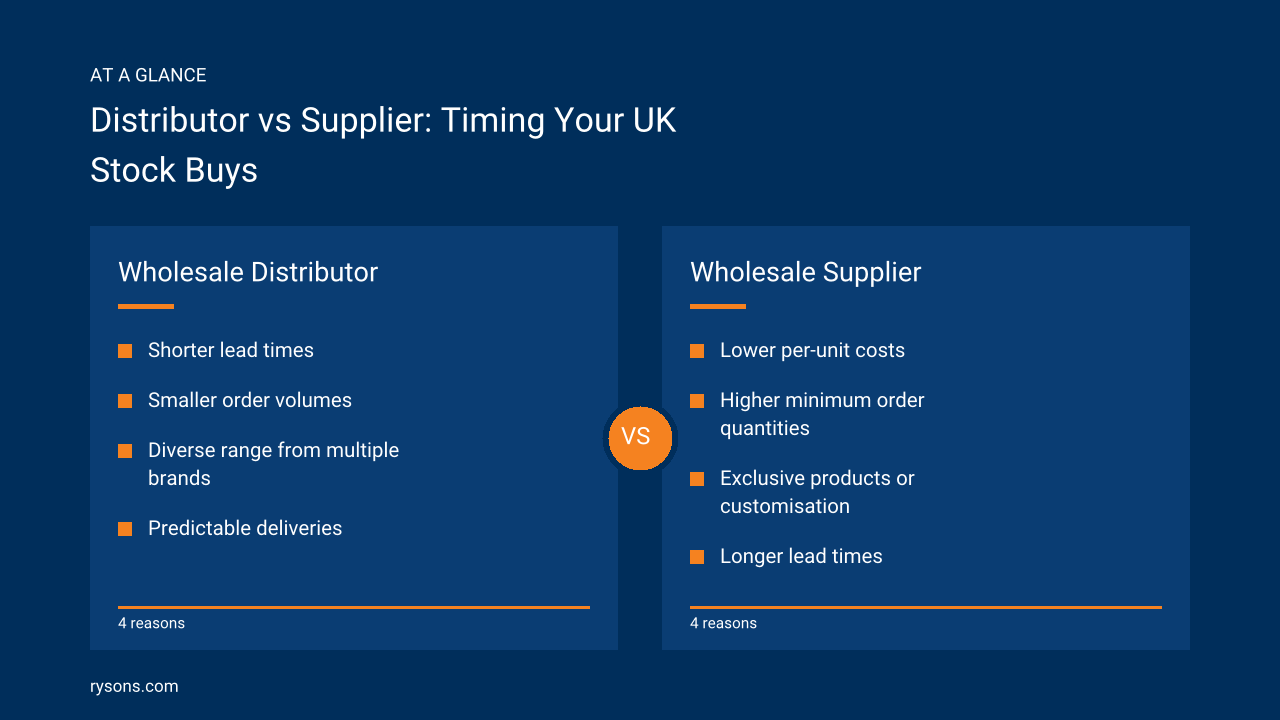
The core distinction for trade buyers lies in lead times and cost per unit. Distributors, holding stock in their own warehouses (like our real Manchester warehouse where you can collect in person), generally offer shorter lead times and faster replenishment. This is vital for quickly responding to sudden demand shifts or topping up best-sellers. However, their convenience comes with a slight markup.
Suppliers typically offer lower per-unit costs because you're closer to the manufacturing price. But this usually comes with higher MOQs and longer lead times, as orders might be produced on demand or imported in larger batches. For instance, ordering a container of home & garden items directly from an overseas manufacturer might save you 10-15% per unit, but you could wait 8-12 weeks for delivery and need to commit to thousands of units. Online sales in the UK soared by 36% in the past 12 months, with e-commerce forcing physical retail closures, making efficient stock management and quick replenishment from distributors even more critical.
When to Work with a Distributor vs. a Supplier: Your 2026 Playbook
Making the right choice depends on your business size, product type, and cash flow. Most independent retailers will use a combination of both.
Opt for a Distributor When:
- You need quick replenishment: For fast-moving consumer goods or unexpected spikes in demand for items like Interior Dehumidifiers.
- Your order volumes are smaller: Distributors allow you to buy in smaller quantities, avoiding overstocking and tying up capital. Rysons, for example, has no minimum order for most lines, making it ideal for small shops and new online sellers.
- You're testing new products: Distributors let you trial new lines without significant financial commitment.
- You need a diverse range from multiple brands: A distributor can provide a wide variety of pound lines or clearance stock from different sources in one order.
- You value predictable deliveries and simpler ordering: Distributors often have established logistics, offering clear lead times with minimal delivery issues.
Opt for a Supplier When:
- You can commit to high volumes: For established best-sellers where you can confidently order thousands of units, like our Fleece Thermal Insoles before winter.
- You seek better per-unit pricing: Higher volumes often unlock significant cost savings.
- You want exclusive products or customisation: Direct relationships can lead to bespoke orders or unique lines not available elsewhere.
- You have longer lead times: If you can plan your stock months in advance, the longer wait for a direct shipment can be worthwhile.
- You want to build a direct relationship with a brand: Essential for becoming a specialist retailer or securing better terms over time.
Practical Onboarding Timelines and Cost Comparison
This is where many competitor guides fall short. Getting set up with a distributor like Rysons is typically much faster than with a direct supplier, especially an overseas one. For local distributors, you can often place your first order within days of account setup. For Rysons, given our 'no minimum order' policy on most lines, you can literally set up an account and order same-day for collection or dispatch.
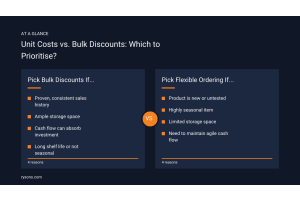
Direct suppliers, particularly manufacturers, often require more extensive vetting, credit checks, and longer contract negotiations, which can stretch to weeks or even months for the first order. The actual cost difference per unit can vary wildly, but a general rule of thumb is that buying from a distributor might add 5-15% to the unit cost compared to buying directly from the manufacturer at high volume. However, that 5-15% buys you flexibility, reduced storage costs, faster cash flow, and less risk of dead stock.
For example, a shop owner should buy narrow and deep on proven sellers, not wide and shallow across novelty lines. This strategy is easier to execute with a distributor's flexible ordering. Buying the cheapest version of a line usually costs more: returns and dead stock wipe out the saving – a good clearance line is branded stock at a low price, not low-quality stock at a low price.
Your Autumn/Winter Stocking Checklist: Order Now for Profit
Seasonal stock is bought too late by most independents – the money is made by ordering while the season is still a month away. To capitalise on the upcoming colder months, here’s what to consider ordering now to be ready for peak selling windows:
- Window Insulation Kits & Double Draught Excluders: Order by late September for October sales. These are high-demand items as energy bills rise.
- Interior and Hanging Wardrobe Dehumidifiers: Stock up by early October. These are year-round sellers but peak in damp autumn/winter months.
- Fleece Thermal Insoles & Baby Thermal Blankets: Order by mid-October for November/December. Essential comfort items with good margins.
- Car Windscreen Frost Protector & Ice Scraper Glove: Crucial for November/December sales. Order by late October to ensure availability before the first frost.
Frequently Asked Questions for UK Trade Buyers
What makes suppliers reliable?
Reliable suppliers, whether distributors or direct, offer simple ordering processes, predictable deliveries, clear lead times, and minimal delivery issues. Good communication and partnership support are key indicators.
Should I buy from a supplier with multiple brands or a distributor focused on one manufacturer?
A supplier with multiple brands (like Rysons) offers breadth and flexibility to test products. A distributor focused on one manufacturer might offer stricter terms but often comes with exclusivity benefits or deeper product expertise for that specific brand.
When is direct buying worth pursuing, and at what volume?
Direct buying is worth it when your order volume is consistently high enough to meet the supplier's MOQ and the per-unit cost saving outweighs the increased lead time, storage costs, and potential for less flexible returns. This usually means thousands of units for general merchandise.
Understanding the nuances between distributors and suppliers is not just academic; it's a strategic decision that directly impacts your profitability and efficiency. By aligning your purchasing strategy with your business needs and the specific product categories, you can secure better deals, manage your inventory more effectively, and ensure your shelves are stocked with what customers want, precisely when they want it. For a wide range of products with flexible ordering, explore our full catalogue today at Rysons.com.