

Unit Costs vs. Bulk Discounts: Which to Prioritise?
UK shop price inflation hitting 1.2% year-on-year means every penny counts when sourcing stock. Deciding whether to chase the lowest unit cost through bulk discounts or prioritise smaller, more frequent orders based on immediate needs is a critical decision for retailers.
Many buyers confuse volume discounts with true wholesale prices; while all wholesale buying is done in bulk, not all bulk purchases are wholesale. The real question isn't just about the per-unit saving, but how that saving impacts your cash flow and inventory turnover.
The Myth of "Always Buy Bulk" for UK Retailers
A lower quoted unit price does not automatically guarantee higher profit. While a 20% cheaper unit price on 1,000 units sounds appealing, if that stock sits for 60-90 days, the capital locked in inventory can destroy margin faster than the discount saves it. This is the critical cash-flow trap many independent shops fall into.
Producer input prices rose 7.3% in the year to June 2026, as reported by ONS, highlighting the volatility of material costs. This means reviewing price lists quarterly is essential, as even a 5% material cost increase is magnified across bulk orders.

When to Prioritise Unit Cost with Bulk Discounts
Bulk discounts are most effective for staple products with consistently high sales velocity. These are the lines you know will move quickly, allowing you to capitalise on the lower per-unit cost without tying up capital for too long. For example, essential household items or popular pound lines often fit this model.
Consider the everyday lines that sell all year round. Buying these in larger quantities makes sense because their demand is predictable, reducing the risk of dead stock. Rysons, a family-run importer and distributor for over 40 years from Manchester, understands the need for reliable stock that moves.
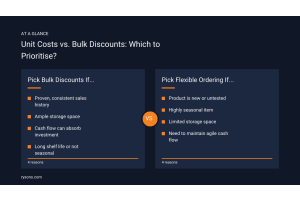
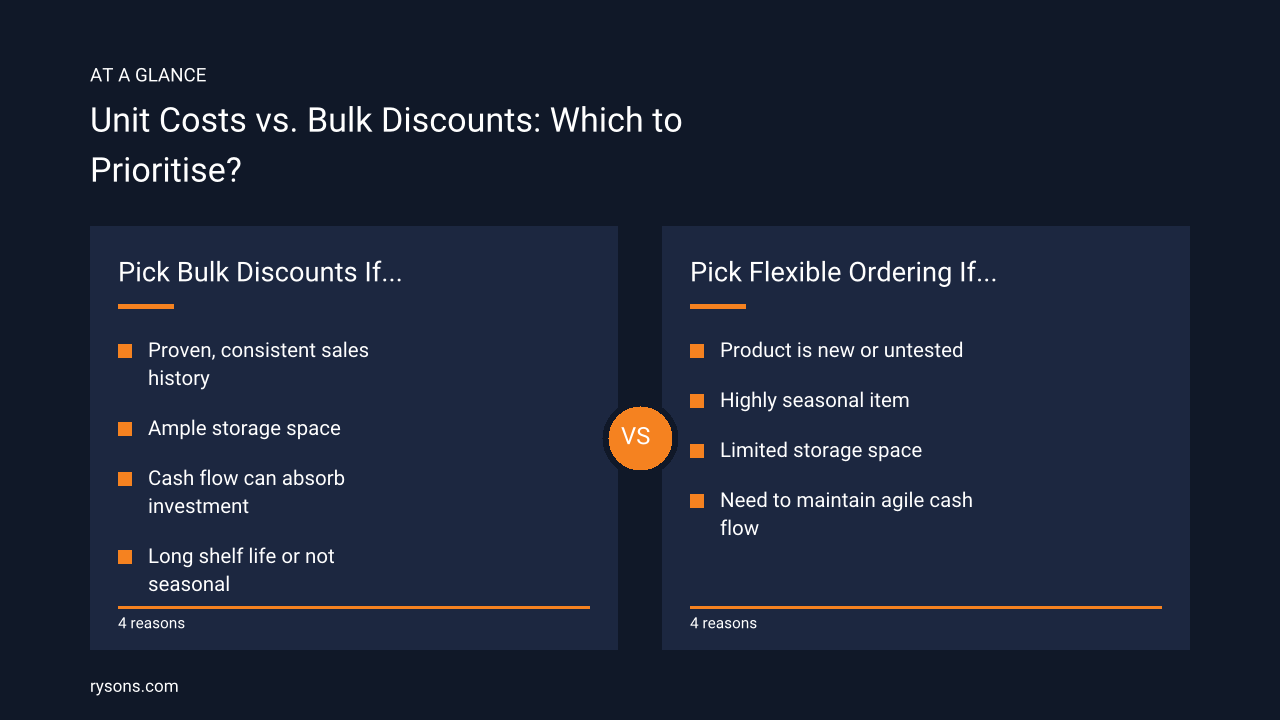
Pick Bulk Discounts If...
- Your product has a proven, consistent sales history: You have clear data showing steady demand.
- You have ample storage space: Stock won't occupy valuable selling floor or incur external storage costs.
- Your cash flow can comfortably absorb the upfront investment: You won't be short on funds for other operational needs.
- The product has a long shelf life or is not seasonal: Minimises risk of obsolescence.
- You can achieve a significant price break: The unit cost saving genuinely boosts your overall profit margin on sale.
When to Prioritise Flexible Ordering & Unit Cost Management
For new lines, seasonal items, or products with unpredictable demand, smaller, more frequent orders are often the smarter choice. While the per-unit cost might be slightly higher, you reduce the risk of holding unsold inventory and free up capital for other investments.
A shop owner should buy narrow and deep on proven sellers, not wide and shallow across novelty lines. Buying the cheapest version of a line usually costs more in the long run due to returns and dead stock wiping out any initial saving.
For example, if you're experimenting with new party supplies, starting with a smaller order allows you to test market demand without significant financial commitment. The upfront cost for sustainable packaging might be marginally higher, but long-term brand loyalty benefits are becoming harder to ignore, as highlighted by EZ3PL in 2026.
Pick Flexible Ordering If...
- The product is new or untested in your market: Minimise risk until demand is established.
- It's a highly seasonal item: Order closer to the season to avoid carrying stock for months. Seasonal stock is often bought too late by independents; the money is made by ordering while the season is still a month away.
- Your storage space is limited: Avoid clutter and maximise efficient use of your retail footprint.
- You need to maintain agile cash flow: Keep capital liquid for unexpected opportunities or expenses.
- The bulk discount is marginal: The saving doesn't justify the increased inventory risk.
Understanding Your True Break-Even Point
Trade buyers need to differentiate between an advertised per-unit saving and their true break-even point. This includes not just the purchase price, but also the cost of capital tied up in stock, storage costs, potential markdowns, and even the administrative cost of managing larger inventories. Use a Wholesale Margin Calculator to factor in all these elements.
With no minimum order for most lines at Rysons, small shops and new online sellers have the flexibility to start small and scale up as they identify proven sellers across our 5,000 active lines.
Your Wholesale Pricing Strategy Checklist
- Analyse Sales Velocity: For each product, understand how quickly it sells. High velocity supports bulk buys.
- Calculate Inventory Holding Costs: Factor in storage, insurance, obsolescence, and capital cost.
- Review Supplier Tiers: Understand the exact discount breakpoints for different volumes.
- Assess Cash Flow: Ensure you have sufficient working capital before committing to large orders.
- Monitor Market Trends: Consumer demand for items can shift quickly, especially in categories like health & beauty or toys & games.
Frequently Asked Questions
Is my "bulk deal" actually profitable?
Not always. A bulk deal is only profitable if the unit price saving outweighs the costs of holding that stock (storage, capital tied up, potential markdowns) until it sells. Always calculate your true profit margin, considering all associated costs.
How often should I review my wholesale pricing strategy?
Given the current market volatility, with CPI rising to 2.9% in July 2026, reviewing your pricing strategy quarterly is a sensible approach. This allows you to adapt to changes in supplier input costs and consumer demand.
What's the biggest mistake retailers make with bulk buying?
The biggest mistake is ignoring the cost of capital and inventory turnover. Many retailers focus solely on the per-unit saving, without considering how long their money will be locked up in stock, which can severely impact their short-term cash flow and overall profitability.
Making informed decisions about unit costs and bulk discounts is paramount for your business's health. By carefully evaluating your sales velocity, cash flow, and storage capacity, you can build a purchasing strategy that maximises profit and minimises risk. Explore our extensive range of wholesale products at Rysons.com and apply these principles to your next order.