

Trading Cards vs Novelty: Which Pokemon Stock Pays?
The Pokémon 30th Celebration merchandise hit the UK market on October 2, 2026, bringing 2-pack Blister packs (RRP £9.99) and Tech Sticker Collections (RRP £16.99) to shop shelves. Concurrently, a high-profile collaboration with the European Space Agency at the Science Museum London has driven massive demand for Astronaut Pikachu plushies. The brand momentum is undeniable, but for independent retailers, stocking licensed merchandise is a balancing act of margins, allocations, and shelf space.
You have a choice to make for your Q4 and 2027 inventory: do you allocate your open-to-buy budget toward the Trading Card Game (TCG), or do you pivot to novelty merchandise like apparel, stationery, and plush toys?
How the 2029 London Flagship Store Changes Your Buying Strategy
If you search for wholesale advice on this brand, you will find generic lists of product categories and RRP anchors. What they all miss is the massive shift coming to the UK market: The Pokémon Company's recent announcement of a permanent physical retail store opening in London by 2029. This single fact should dictate your buying strategy right now.
Will the official store restrict rare TCG supplies to independent wholesalers? Almost certainly. Flagship stores rely on exclusive merchandise and one-of-a-kind experiences to drive footfall. Over the next two to three years, independent retailers will likely see their allocations of high-end, collector-tier items squeezed as stock is diverted to the capital.
The strategic response is to step away from the battle for rare collector items. Instead, build your customer base around accessible, everyday licensed merchandise. When the London store opens, parents will still buy impulse items from their local high street rather than travelling to the flagship. You need to position your shop as the reliable local source for affordable, high-turnover lines.

TCG vs Novelty Merchandise: The Margin Comparison
To prepare for the next two years of trading, you need to understand the fundamental difference between the two main categories of licensed stock.
Option A: The Trading Card Game (TCG)
Products like the recent 30th Celebration Mini Tin CDU packs (RRP £12.99) and Booster Pack Bundles are the lifeblood of the brand's footfall.
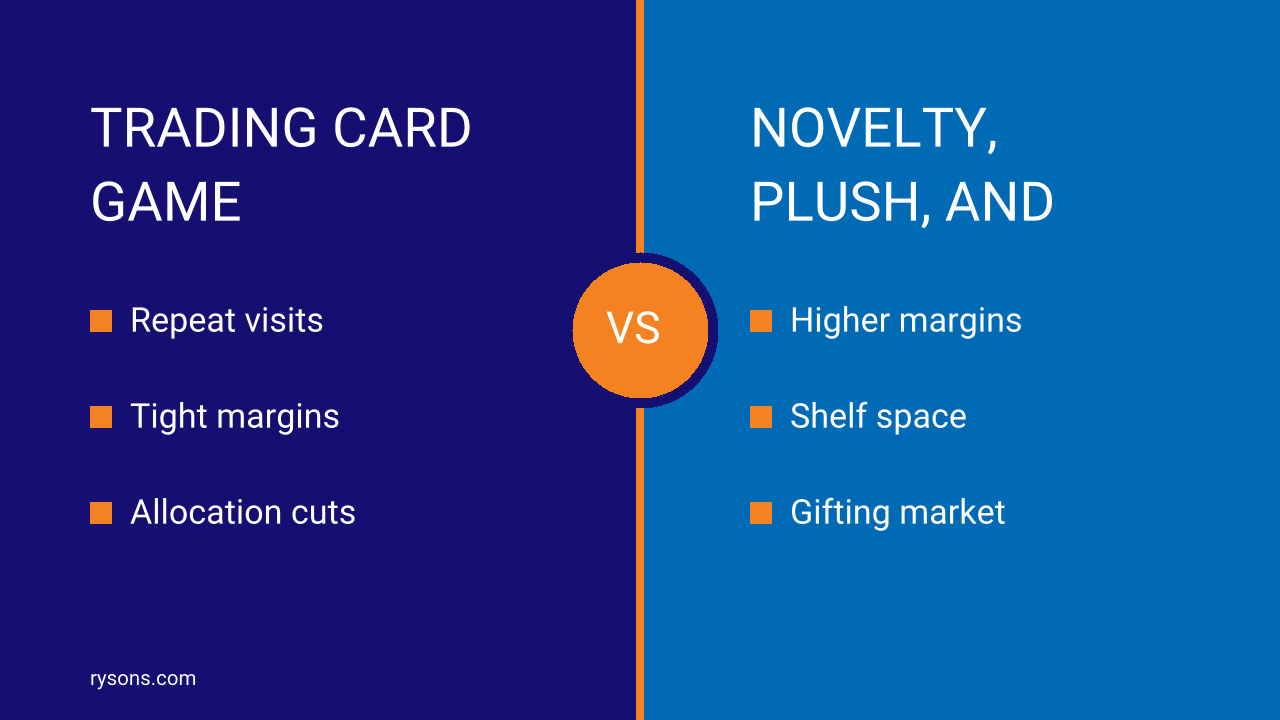
The Reality: Cards bring customers into your shop every week. However, the margins are notoriously tight. You are trading margin for volume and repeat visits. Furthermore, allocations on hot sets like the Wave 2 pre-orders are often slashed by distributors, leaving you short on release day.
Option B: Novelty, Plush, and Apparel
This category covers everything from Astronaut Pikachu plushies to branded backpacks, lunchboxes, and tech accessories.
The Reality: These items command a much higher retail markup. A branded plush toy or a set of licensed stationery & books allows for standard retail margins, giving your cash flow room to breathe. The downside is that these items take up significant physical shelf space and do not guarantee the weekly repeat visits that trading cards do.
How to Choose Your Stock Profile
Do not try to be everything to every customer. A shop owner should buy narrow and deep on proven sellers, not wide and shallow across novelty lines. Choose your lane based on your shop's footprint and customer base.
- Pick TCG if: You run a dedicated hobby shop, newsagent, or convenience store where weekly repeat footfall is your primary metric. You have the counter space to display CDU packs securely to prevent theft.
- Pick Novelty and Plush if: You operate a gift shop, a larger independent toy retailer, or a seasonal pop-up. You need the higher margins to justify the floor space and want to capture the gifting market, pairing these items with other high-margin toys & games.
- Pick a Hybrid Strategy if: You have the capital to use TCG as a loss-leader. You stock the £9.99 Blister packs at the till to draw customers in, but your primary profit comes from cross-selling them high-margin licensed apparel or impulse pound lines on their way to the counter.
Balancing Licensed Stock with General Merchandise
Relying entirely on one licensed property is a risk, especially when distributor allocations fluctuate. While you source your licensed exclusives from specialist distributors, you must balance your shelves with reliable, unbranded stock that offers double the margin.
For more detailed strategies on structuring your seasonal inventory and protecting your cash flow, consult our Wholesale Buying Guides. Smart retailers use the hype of a 30th Anniversary to get customers through the door, but they pay their rent using the everyday items those customers buy while browsing.
Your Q4 Action Checklist
If you are adjusting your inventory to capitalise on the current brand momentum, follow these immediate steps:
- Audit your pre-orders: Check your allocations for the Wave 2 Booster Bundles immediately. If your distributor has cut your numbers, reallocate that budget to high-margin novelty items.
- Watch the collaborations: The Science Museum London collaboration runs until January 3, 2027. Stock up on space-themed or educational tie-in toys while the national PR campaign is active.
- Secure the till point: Move all high-value, small-footprint items (like Tech Sticker Collections) behind the counter to reduce shrinkage during the busy Q4 rush.
- Buy narrow and deep: Identify the two best-performing SKUs from the October 2 release and double your order volume on those, rather than buying single cases of twenty different items.
Frequently Asked Questions
How do I source fresh 30th Anniversary stock without overstocking duplicate inventory?
Focus on consumable or semi-consumable items like Booster Bundles and Tech Stickers. Collectors buy these in multiples. Avoid overstocking large, expensive display pieces (like oversized plushies) which have a much slower sell-through rate and tie up your open-to-buy budget.
What is the margin difference between TCG cards and novelty merchandise?
Trading cards typically offer a gross margin of 20% to 30%, depending on your distributor tier and order volume. Novelty merchandise, plush toys, and apparel generally offer standard retail margins of 40% to 50%, making them far more profitable per square foot of display space.
Will the 2029 London store stop me from getting stock?
It will not stop you from getting standard sets, but it will likely monopolize limited-edition releases, promotional cards, and high-tier collector boxes. Plan your 2027 and 2028 buying around standard, mass-market lines that parents buy for children, rather than chasing collector whales.
Balancing high-profile licensed goods with high-margin everyday items is the key to a profitable retail footprint. Once you have secured your licensed allocations, fill the rest of your shelves with reliable, fast-moving stock. Explore the full range of wholesale products at Rysons.com to protect your margins this quarter.