

Maximising Wholesale Profit: A UK Retailer's Pricing Guide
In the dynamic and competitive landscape of UK wholesale, setting the right price for your products is not just about covering costs; it's about strategically positioning your business for sustainable growth and maximising profitability. For B2B suppliers, understanding the nuanced relationship between your pricing structure and your retailers' success is paramount. This comprehensive guide delves into effective wholesale pricing strategies, offering retail-centric insights to help you optimise your margins while ensuring your products remain attractive to your UK retail partners.
Understanding Your Costs: The Foundation of Profitability
Before you can even think about setting a price, you must have an impeccable understanding of every cost associated with bringing your product to market. This goes beyond the direct manufacturing cost.
Direct Costs
- Material Costs: The raw materials or components used in your product.
- Labour Costs: Wages for production staff directly involved in making the product.
- Manufacturing Overheads: Costs directly attributable to production, such as electricity for machinery, factory rent, and depreciation of equipment.
Indirect Costs (Operating Expenses)
- Administrative Costs: Salaries for office staff, general office supplies, utilities.
- Marketing & Sales Costs: Advertising, trade show expenses, sales commissions, website maintenance.
- Shipping & Logistics: Transportation, warehousing, packaging, and delivery to your retail partners. This is particularly crucial for clearance items where efficient logistics can make or break profitability.
- Research & Development: Costs associated with developing new products or improving existing ones.
- Taxes & Insurance: Business rates, corporation tax, various insurance policies.
- Financial Costs: Bank charges, interest on loans.
A common mistake is to only factor in direct costs. Ignoring indirect costs leads to underpricing, which erodes your profit margins over time. Create a detailed spreadsheet to track all these expenses meticulously. Knowing your true cost per unit is the absolute bedrock of any sound pricing strategy.

Key Wholesale Pricing Models for UK B2B
Once you have a firm grasp of your costs, you can explore various pricing models. The best approach often involves a combination, tailored to your product, market, and business goals.
1. Cost-Plus Pricing
This is arguably the simplest method. You calculate your total cost per unit and then add a predetermined profit margin percentage. For example, if a product costs £10 to produce and you want a 30% profit margin, your wholesale price would be £13.

- Pros: Easy to implement, ensures all costs are covered, guarantees a profit.
- Cons: Doesn't consider market demand, competitor pricing, or perceived value. Can lead to overpricing or underpricing relative to the market.
2. Value-Based Pricing
This model sets prices based on the perceived value of your product to the customer, rather than solely on your costs. If your product solves a significant problem for retailers or offers unique benefits that translate into higher sales for them, you can command a higher price.
- Pros: Maximises profit for unique or high-value products, aligns with customer benefit.
- Cons: Difficult to quantify perceived value, requires deep market understanding, can be subjective.
3. Competitive Pricing
Here, you set your prices primarily based on what your competitors are charging for similar products. This requires thorough market research to identify your direct and indirect competitors and their pricing structures.
- Pros: Ensures competitive positioning, can attract price-sensitive retailers.
- Cons: Can lead to price wars, may not cover your specific costs, can undervalue unique aspects of your product.
4. Tiered Pricing / Volume Discounts
Many wholesalers offer different price points based on the quantity purchased. This encourages larger orders and builds stronger relationships with high-volume retailers. For instance, a retailer buying 100 units might pay £12 per unit, while one buying 1000 units pays £10 per unit. This is very common for bulk purchases of items like household essentials or stationery & books.
- Pros: Incentivises larger orders, improves customer loyalty, simplifies inventory management for both parties.
- Cons: Can complicate pricing structure, requires careful calculation to maintain margins across tiers.
5. Keystone Pricing (Double Cost)
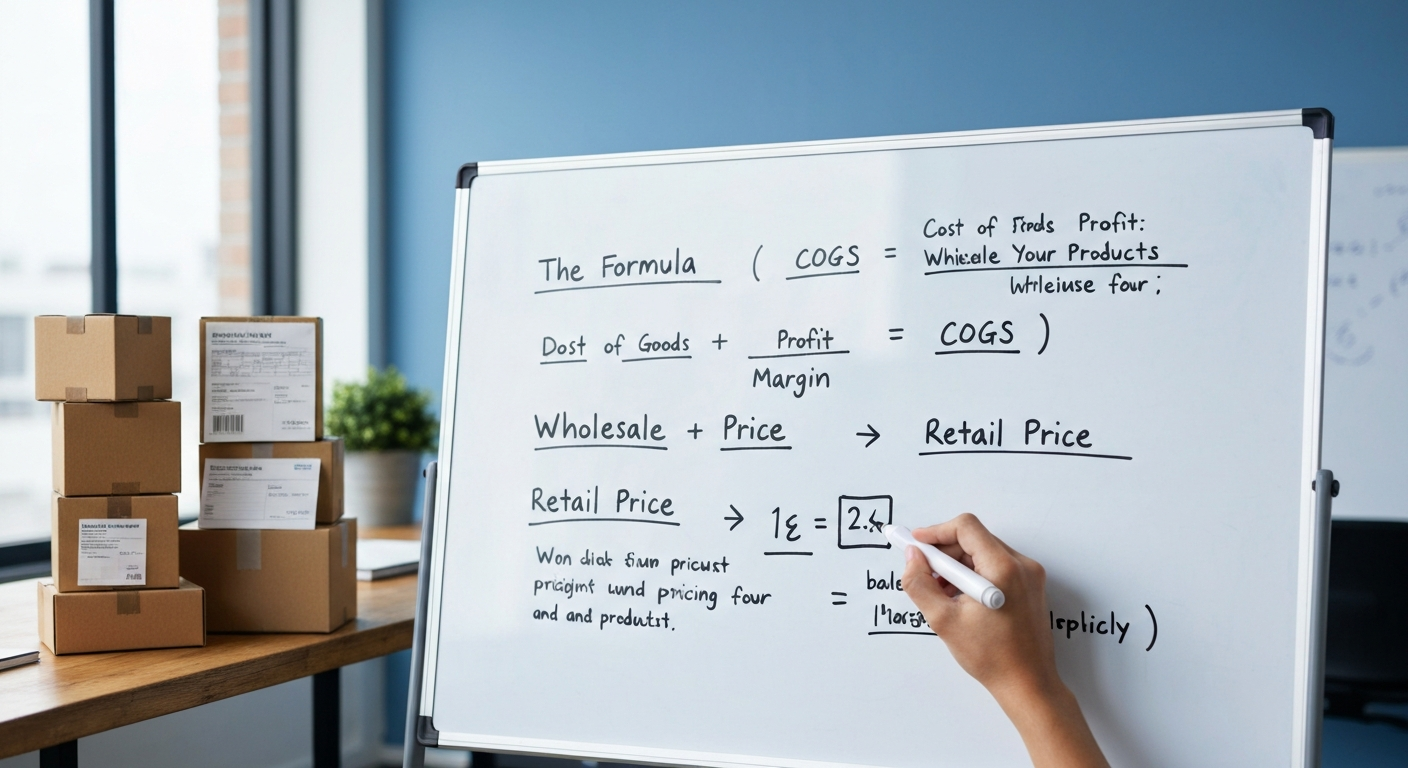
A simple rule of thumb for many retailers is to double the wholesale price to arrive at the retail price. Therefore, if you aim for your retailers to use keystone pricing, your wholesale price should be half of the intended retail price. While simplistic, it's a quick way to ensure your retailers have a healthy margin.
- Pros: Easy for retailers to understand and apply, ensures a good retail margin.
- Cons: May not be suitable for all product types or market conditions, doesn't account for specific costs or value.
The Retailer's Perspective: Why Your Pricing Matters to Them
Remember, your wholesale price directly impacts your retailers' ability to make a profit. A retailer needs to cover their own operational costs (rent, staff wages, marketing, utilities) and still make a healthy margin after selling your product. Typically, retailers aim for a gross profit margin of 40-60% on goods, though this varies significantly by sector and product type.
When setting your wholesale price, consider the following from your retailer's viewpoint:
- Their Desired Mark-up: What mark-up do they need to achieve their target profit margins?
- RRP (Recommended Retail Price): While not legally binding, providing a realistic RRP helps retailers position your product. Ensure your wholesale price allows them to hit this RRP with a decent margin.
- Competitiveness: Can they sell your product at a competitive retail price while still making a profit?
- Sales Velocity: How quickly will the product sell? A fast-moving item might tolerate a slightly lower margin, whereas a slower-moving, higher-value item needs a larger margin to justify the inventory holding cost. Products like toys & games or seasonal items often have different velocity considerations.
- Promotional Opportunities: Does your pricing allow them room to offer discounts or run promotions without losing money?
Strategic Considerations for UK Wholesalers
Beyond the core models, several strategic elements can refine your pricing approach.
Market Research and Competitor Analysis
Regularly research your market. Who are your direct competitors? What are their prices? What value do they offer? Look at indirect competitors too. Understanding the broader market helps you identify gaps, differentiate your offering, and justify your pricing. Tools like online price trackers and industry reports can be invaluable.
Value Proposition and Differentiation
What makes your product unique? Is it superior quality, innovative design, ethical sourcing, or exceptional customer service? Clearly articulating your value proposition allows you to justify a premium price. If you're selling standard DIY tools, differentiation might be harder than for a niche health & beauty product.
Psychological Pricing
Consider the psychological impact of your prices. Ending prices in .99 (e.g., £9.99 instead of £10.00) can make them appear significantly cheaper. Bundle pricing (offering multiple products together at a slightly reduced combined price) can also increase perceived value and average order value.
Dynamic Pricing and Flexibility
The market is rarely static. Be prepared to adjust your prices in response to changes in material costs, competitor actions, seasonal demand, or economic shifts. While consistency is good for retailer relationships, rigidity can be detrimental to your profitability.
Minimum Order Quantities (MOQs)
Setting appropriate MOQs is another form of pricing strategy. It helps you cover fixed costs per order, reduces administrative overheads, and encourages larger purchases, improving your overall efficiency.
Common Wholesale Pricing Pitfalls to Avoid
- Underpricing: The most common mistake. It leaves money on the table, devalues your product, and can lead to unsustainable business practices.
- Overpricing: Can deter potential retailers, make your products uncompetitive, and result in slow sales and high inventory holding costs.
- Ignoring Indirect Costs: As mentioned, failure to account for all operational expenses will lead to an inaccurate cost base and ultimately, reduced profits.
- Not Reviewing Prices Regularly: Markets change, costs fluctuate, and competitor strategies evolve. Your pricing strategy should not be set in stone.
- Lack of Transparency: Retailers appreciate clear, consistent pricing. Hidden fees or inconsistent application of discounts can damage trust.
Conclusion: Striking the Right Balance for UK Wholesale Success
Wholesale pricing is an art as much as it is a science. It requires a deep understanding of your own costs, a keen awareness of the market, and a strong empathy for your retail partners' needs. By meticulously calculating your costs, exploring various pricing models, and always viewing your prices through the lens of your retailers' profitability, you can strike a balance that ensures your business thrives.
Remember, the goal is not just to sell products, but to build lasting, profitable relationships with your B2B clients across the UK. Continually review and optimise your pricing strategy to adapt to market changes and secure your competitive edge.
Discover a vast range of quality wholesale products and competitive pricing to support your business growth. Explore our extensive catalogue and find out how Rysons.com can empower your retail success today.