

Maximising UK Retail Profit Margins Online

In the dynamic landscape of UK online retail, achieving and sustaining healthy profit margins is paramount for success. For B2B wholesale suppliers, understanding the challenges and strategies employed by their retail customers is crucial for fostering robust partnerships. This blog post delves into the core aspects of selling online in the UK, offering insights into profit margin optimisation from a retail perspective, and highlighting how strategic wholesale sourcing can be a game-changer.
Understanding the UK Online Retail Landscape
The UK e-commerce market is fiercely competitive, characterised by informed consumers, evolving technologies, and a constant pressure on pricing. Retailers face a delicate balancing act: offering competitive prices to attract customers while ensuring sufficient margins to cover costs and generate profit. The shift towards online shopping has accelerated, making digital presence a necessity, but also introducing new layers of complexity to cost structures.

For many UK retailers, the journey to profitability online is paved with careful planning and continuous optimisation. It’s not just about selling more; it’s about selling smarter. This involves a deep dive into every aspect of the business, from sourcing products to final delivery and customer service.
The Profit Margin Equation: More Than Just Price
At its simplest, profit margin is the difference between revenue and costs, expressed as a percentage. However, in online retail, 'costs' encompass a broad spectrum of elements that can significantly erode profitability if not managed effectively. Understanding these components is the first step towards improvement.

Key Factors Influencing Online Profit Margins
Online retailers in the UK contend with a unique set of cost drivers that directly impact their bottom line. A holistic view of these factors is essential for any effective margin optimisation strategy.
Cost of Goods Sold (COGS)
This is arguably the most significant determinant of gross profit. For retailers, COGS includes the direct cost of purchasing products from wholesalers, as well as any costs incurred to bring those products to saleable condition (e.g., import duties, freight). Higher COGS directly translates to lower gross margins, making efficient and cost-effective sourcing a critical component.
- Wholesale Pricing: The unit price paid to the wholesaler.
- Bulk Discounts: Opportunities to reduce unit cost by ordering larger quantities.
- Supplier Relationships: Long-term partnerships can often lead to better terms and pricing.
Operating Costs
These are the expenses incurred to run the online business, independent of the product itself.
- Platform Fees: Costs associated with e-commerce platforms (e.g., Shopify, Magento) or marketplace commissions (e.g., Amazon, eBay). These can be substantial, especially for high-volume sellers.
- Website Maintenance: Hosting, security, software updates, and developer fees.
- Payment Processing Fees: Charges from payment gateways (e.g., PayPal, Stripe) for each transaction.
- Staffing Costs: Wages for roles in customer service, marketing, inventory management, and order fulfilment.
- Rent/Utilities: For warehouses or office spaces, if applicable.
Marketing and Advertising Expenses
Attracting customers online requires significant investment in various marketing channels.
- Paid Advertising: Google Ads, social media ads (Facebook, Instagram, TikTok), display ads. These costs can fluctuate wildly based on competition and campaign effectiveness.
- Search Engine Optimisation (SEO): Investment in improving organic search rankings, often through content creation and technical optimisation.
- Email Marketing: Platform fees and staff time for creating and sending campaigns.
- Influencer Marketing: Payments or free products provided to influencers.
Shipping and Fulfilment Costs
Often underestimated, these costs can heavily impact margins, particularly with customer expectations for fast and free delivery.
- Packaging Materials: Boxes, tape, void fill, labels.
- Shipping Carrier Fees: Costs for postage and delivery services.
- Warehouse Labour: Staff involved in picking, packing, and dispatching orders.
- Returns Logistics: Costs associated with processing returns, including return shipping and restocking.
Returns and Customer Service
While essential for customer satisfaction, these areas can be significant cost centres.
- Return Rate: A high return rate directly impacts profitability through lost sales, shipping costs, and processing fees.
- Customer Support: Staffing costs for handling enquiries, complaints, and returns.
- Refunds/Replacements: Direct financial impact of issuing refunds or sending replacement products.
Strategies for Optimising Profitability
With a clear understanding of the cost landscape, UK retailers can implement targeted strategies to enhance their online profit margins.
Strategic Sourcing and Wholesale Partnerships
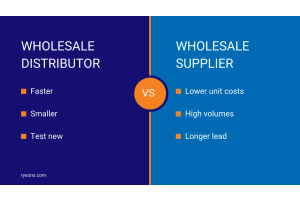
This is where the relationship with a reliable B2B wholesaler like Rysons becomes invaluable. Lowering COGS without compromising quality is a cornerstone of margin improvement.
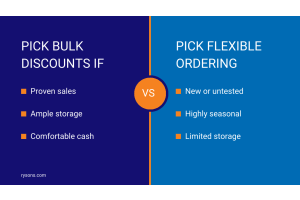
- Bulk Purchasing: Buying in larger quantities from wholesalers often unlocks significant unit cost reductions. Retailers should analyse their sales data to identify best-selling items and commit to larger orders for these.
- Diverse Product Range: Working with a wholesaler that offers a broad selection across categories, such as home & garden, toys & games, and health & beauty, allows retailers to consolidate orders, potentially reducing shipping costs and simplifying logistics.
- Identifying Value: Retailers should actively seek out wholesale partners offering competitive pricing on essential items, from household essentials to seasonal products.
- Long-Term Relationships: Building strong relationships with wholesalers can lead to better credit terms, early access to new products, and exclusive deals.
Dynamic Pricing Models
Static pricing in a dynamic online market is a recipe for missed opportunities. Retailers should explore flexible pricing strategies.
- Competitive Pricing: Regularly monitor competitor pricing for similar products and adjust accordingly.
- Value-Based Pricing: Price products based on perceived value to the customer, rather than solely on cost-plus.
- Bundling: Offer product bundles at a slightly reduced price compared to individual items, increasing average order value (AOV) and potentially clearing slower-moving stock.
- Promotions & Sales: Strategic use of discounts and promotions to drive sales volume without excessively eroding margins.
Efficient Inventory Management
Holding too much stock ties up capital and incurs storage costs, while too little leads to lost sales. Optimal inventory management is crucial.
- Just-in-Time (JIT) Inventory: Minimise stock holdings by ordering products as they are needed, reducing storage costs and risk of obsolescence. This relies heavily on reliable wholesale suppliers with quick turnaround times.
- Demand Forecasting: Utilise sales data and market trends to accurately predict future demand, preventing overstocking or understocking.
- Clearance Strategies: Implement effective strategies for selling off slow-moving or end-of-line stock, perhaps by offering pound lines or bundle deals, to free up warehouse space and capital.
Optimising Marketing Spend
Every penny spent on marketing should deliver a measurable return.
- Targeted Advertising: Refine audience targeting to ensure ads reach the most relevant potential customers, improving conversion rates and reducing wasted spend.
- Content Marketing & SEO: Invest in high-quality content that attracts organic traffic, a more cost-effective long-term strategy than paid ads.
- Email List Building: Cultivate an engaged email list for direct, low-cost marketing campaigns.
- Affiliate Marketing: Partner with affiliates who earn commission only on successful sales, a performance-based marketing approach.
Enhancing Customer Lifetime Value (CLV)
Acquiring new customers is expensive; retaining existing ones is far more cost-effective.
- Exceptional Customer Service: Prompt, helpful, and friendly support builds loyalty and encourages repeat purchases.
- Loyalty Programmes: Reward repeat customers with discounts, exclusive access, or points programmes.
- Personalisation: Tailor product recommendations and communications based on past purchases and browsing behaviour.
- Post-Purchase Engagement: Follow-up emails, review requests, and exclusive offers for returning customers.
Leveraging Wholesale for Competitive Advantage
For UK retailers, the relationship with their wholesale supplier is a critical component of their profit margin strategy. A strong wholesale partnership can provide:
- Cost Savings: Access to bulk pricing and special offers that significantly reduce COGS.
- Product Diversity: The ability to stock a wide range of popular items, from electrical goods to auto accessories, without managing multiple suppliers.
- Reliable Supply Chain: Consistent availability of popular products ensures retailers can meet customer demand and avoid stockouts.
- Speed to Market: Quick order processing and delivery means retailers can respond rapidly to market trends and seasonal demand.
- Reduced Risk: Wholesalers often absorb some of the risk associated with inventory, offering flexible ordering and returns policies.
By carefully selecting their wholesale partners, retailers can secure a stable supply of quality products at competitive prices, directly impacting their ability to offer value to their end-customers while maintaining healthy margins.
Common Pitfalls to Avoid
Even with the best intentions, retailers can fall into traps that erode their profit margins.
- Underestimating Hidden Costs: Forgetting to account for all shipping, packaging, payment processing, and return costs can lead to an inflated perception of profitability.
- Race to the Bottom Pricing: Constantly undercutting competitors without understanding one's own cost structure will inevitably lead to unsustainable margins.
- Poor Inventory Management: Overstocking results in holding costs and potential markdowns, while understocking leads to lost sales and customer dissatisfaction.
- Ignoring Customer Feedback: Failing to address customer complaints can lead to higher return rates and a damaged reputation, impacting future sales.
- Ineffective Marketing Spend: Throwing money at marketing channels without clear goals, tracking, and optimisation can be a major drain on resources.
Retailers must regularly review their cost structures, analyse their sales data, and be prepared to adapt their strategies to remain competitive and profitable in the evolving UK online market.
Conclusion
Optimising profit margins in UK online retail is a multifaceted challenge that demands a strategic approach to every aspect of the business. From diligent cost management and smart pricing to efficient inventory practices and effective marketing, every decision impacts the bottom line. For B2B wholesalers, understanding these retailer-centric challenges allows for the development of more supportive and valuable partnerships. By focusing on strategic sourcing through reliable wholesalers, retailers can lay a strong foundation for sustainable growth and profitability in the competitive digital marketplace.
Explore how a diverse range of wholesale products can boost your retail offering and improve your profit margins. Visit Rysons.com today for competitive pricing and a vast selection.